23 miles long, 755 feet deep, and holding more water than every lake in England and Wales combined — Loch Ness is part Highland landscape, part global mystery, and entirely bookable. Most people come for Nessie, but what makes the loch worth the drive is the scenery: the brooding peat-black water, Urquhart Castle on its shore, and the easy cruises that beam live sonar over the deepest part.
One honest tip up front: the loch is so vast that drive-by visitors sometimes leave thinking "it's just a lake." The fix is simple, get on the water. A cruise past Urquhart Castle is the moment that turns a roadside glance into the experience people remember. It works as a half-day Highland stop, a guided day-trip from Edinburgh or Glasgow, or a two-day activity base.
Quick Facts
Length: ~23 miles / 37 km
Max depth: 230 m / 755 ft
Volume: more than all lakes in England & Wales combined
From Inverness: 15–20 min by car (A82)
From Edinburgh/Glasgow: ~3–3.5 hours
Cruises from: Clansman Harbour, Fort Augustus, Drumnadrochit
Best free viewpoint: Dores Beach
Time needed: half a day minimum, 2 days ideal
Loch Ness: Urquhart Castle Round-Trip Cruise
The classic, affordable way to actually experience the loch rather than just glimpse it from the road. This Loch Ness by Jacobite cruise sails you out onto the dark water and round to Urquhart Castle for the iconic view from below — the single most-booked Loch Ness cruise in our data, with live commentary and onboard sonar.
Loch Ness by Jacobite | From $33 per person | Free cancellation | 4.4/5 from 3,241 reviews
Check Availability & PricesOther Experiences You Might Enjoy
Building a longer trip around Loch Ness? Add a day in Glencoe, a detour to Eilean Donan Castle on the way to the Isle of Skye, or a stop at the Glenfinnan Viaduct and a ride on the Jacobite steam train. Day-trippers based in Edinburgh or Glasgow can fold in Loch Lomond along the way. The suggestions below are matched automatically to these Scottish Highlands destinations and experiences.
What Is Loch Ness?
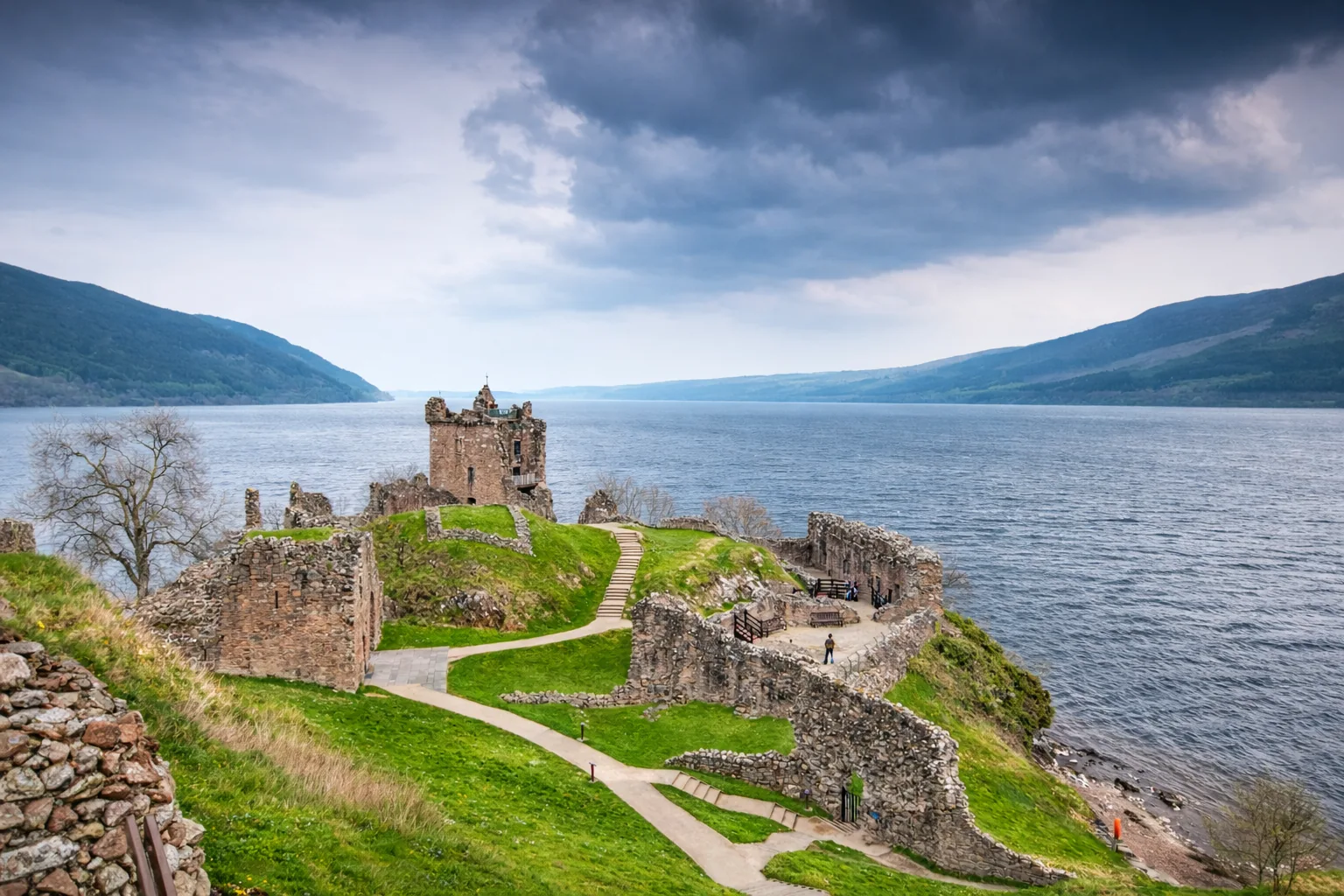
Loch Ness is a freshwater loch on the Great Glen Fault, running roughly 23 miles southwest from Inverness to Fort Augustus. It's the second-largest Scottish loch by surface area and the second-deepest, but the largest by volume in the British Isles, holding around 7.5 km³ of water. It forms part of the Caledonian Canal, Thomas Telford's 60-mile coast-to-coast waterway opened in 1822.
Two quirks explain a lot of the mystery: the loch never freezes (below ~150 ft the water sits at a steady 5–7 °C year-round), and its peaty, near-black water limits underwater visibility to a few inches, which is part of why a "monster" can never be conclusively ruled out. There's just one island, the Iron-Age crannog of Cherry Island, at the southern end.
The Nessie Story, Honestly
The legend is older and stranger than most people realise. Here's the timeline that matters:
- 565 AD — the first recorded encounter, in Adomnán's Life of St Columba, when the saint commands a "water beast" in the River Ness to retreat.
- 1933 — the modern craze begins as a new lochside road opens up clear views and sightings are reported to the Inverness Courier.
- 1934 — the Daily Mail publishes the "Surgeon's Photograph" of a long neck rising from the water; it defines Nessie iconography for 60 years.
- 1987 — Operation Deepscan sends a flotilla of 24 echo-sounder boats down the loch; three deep-water contacts go unexplained.
- 1994. The Surgeon's Photograph is exposed as a hoax: a toy submarine with a model head.
- 2018–19 — Professor Neil Gemmell's environmental-DNA study analyses 500+ million DNA sequences and finds no reptile DNA, but a striking amount of eel DNA — so a giant eel can't be ruled out.
- 2023–present — "The Quest," the biggest organised surface watch since the 1970s, returns each year with thermal drones, hydrophones and volunteers.
The official sightings register now lists over 1,150 entries, and one 2018 study estimated the legend adds £40.7 million a year to the local economy — the only place in Scotland where a folk-tale genuinely moves the books.
Which Loch Ness Cruise Should You Take?
Three main operators work three different ends of the loch. The right one depends on where you're based and what you want.
| Operator | Departs from | From | Best for |
|---|---|---|---|
| Loch Ness by Jacobite | Clansman Harbour / Dochgarroch (near Inverness) | £21 | Slick all-in-one tours and cruise-plus-castle combos from Inverness |
| Cruise Loch Ness | Fort Augustus (south end) | £22 | Live skipper commentary, sonar, and a high-speed RIB option |
| Loch Ness Centre (Deepscan) | Drumnadrochit (Temple Pier) | £25 | Small-group, science-led, monster-hunting feel paired with the exhibition |
Whichever you choose, pick one that passes or stops at Urquhart Castle — seeing the ruin from the water is the universal highlight.
The Nessie Centre & the Best Viewpoints
In Drumnadrochit, don't confuse the two monster attractions. The Loch Ness Centre is the proper one — reopened in 2023 after a £1.5m refurbishment, with a cinematic 45–60 minute walk-through narrated by David Tennant and the small-group Deepscan boat. Nessieland is a separate, kitschier, kid-focused attraction; if you only do one, make it the Centre.
For free views and stops around the shore: Dores Beach (south shore, ~20 min from Inverness) gives the classic look down the full length of the loch and is home to a full-time monster hunter's caravan; Fort Augustus has a photogenic flight of five staircase locks where the Caledonian Canal meets the loch; and the Falls of Foyers is a dramatic gorge waterfall a short, steep walk from a free car park. (Note the lochside Dores Inn is closed for redevelopment, expected back around late 2026.)
When to Go & How Long to Stay
May to September is the obvious window — long days, every cruise and RIB running, attractions fully open (midges are worst June–August, so pack repellent). April and October are the sweet spot for fewer crowds and autumn colour, while the Loch Ness Centre and the year-round Jacobite and Cruise Loch Ness scenic sailings keep winter visits moody but doable. Give the loch half a day for the highlights — a cruise, a viewpoint and Urquhart Castle — or two days to walk a section of the 80-mile Loch Ness 360° Trail and base yourself in Drumnadrochit or Fort Augustus.